
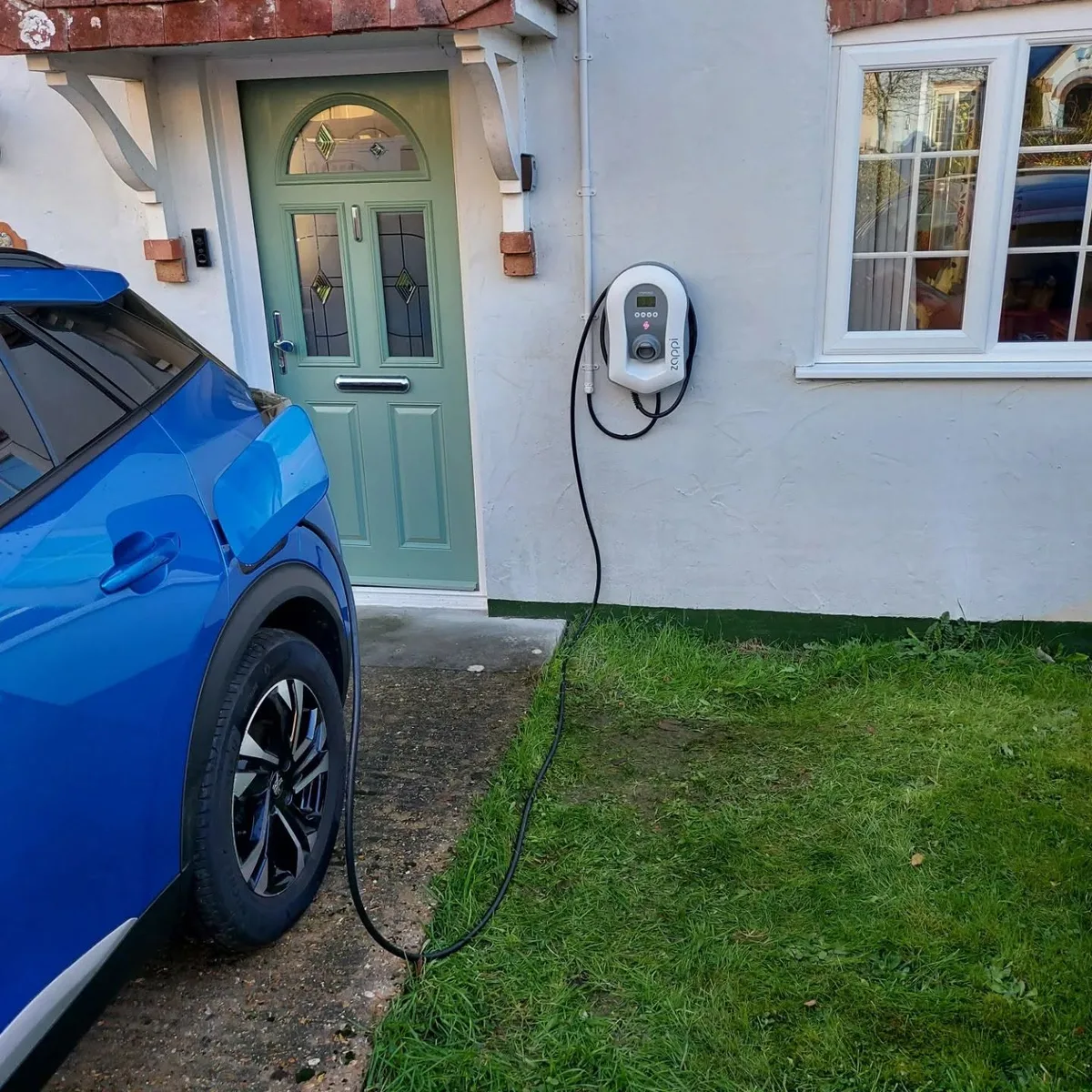
Charging at home is the most convenient way to run an electric vehicle, but a few decisions up front make for a better installation.
A home charge point is faster and more convenient than using a standard three-pin socket, and getting the details right from the start means a tidy, reliable setup that suits your home and how you drive.
This guide covers the key things worth thinking about before you book an installation, so you end up with a charger in the right place, on the right supply, and ready for whatever you add to your home in future.
Key Takeaways
- Your existing electrical supply needs to be checked first
- The charger location affects cable routing and day-to-day convenience
- A tidy, protected cable run matters for both looks and safety
- Charging speed depends on the charger and your vehicle
- It is worth planning for future solar integration now
Check Your Electrical Supply
Before anything else, your electrical supply needs to be assessed to confirm it can support a charge point.
A qualified electrician will check your fuse board, main supply and earthing arrangement to make sure the charger can be added safely without overloading the existing circuits. In some cases a small upgrade to the consumer unit is needed first, which is far better to know about before installation day than to discover halfway through.
Choose the Right Location
Where the charger goes affects both convenience and the amount of work involved.
Things to think about include:
- Where you normally park
- How close that is to the fuse board
- Whether the cable can be routed neatly along walls
- Which side your vehicle’s charging socket is on
- Whether you may park a second vehicle there in future
A good installer will help you choose a location that is practical day to day and keeps the cable run as short and tidy as possible.
Think About the Cable Run
A longer or more awkward cable run can involve extra work, such as routing around the property or some groundworks where the cable needs to cross a driveway or garden.
Planning this properly keeps the finished installation neat and protected, rather than leaving exposed cable that is easily damaged. It also avoids surprises in the quote, because the route is agreed before any work starts.
Understand Charging Speeds
Most home chargers are faster and safer than charging from a standard socket, but the actual speed depends on both the charger and your vehicle.
The table below gives a general picture of the common options. Your vehicle’s onboard charger and battery size will affect the real-world figures.
| Charging option | Typical power | Best for |
|---|---|---|
| Standard three-pin socket | Around 2.3 kW | Occasional top-ups only |
| Home charge point | Around 7 kW | Everyday home charging |
| Twin or higher-output setups | Varies | Multiple vehicles or higher demand |
For most homes, a dedicated 7 kW charge point offers a good balance of speed, convenience and cost, and will fully charge most vehicles overnight.
Consider Future Solar Integration
Even if you are not adding solar now, it is worth thinking ahead.
A charger can be planned so it can later be linked to solar PV and battery storage, allowing you to charge from your own generation rather than drawing entirely from the grid. Planning for this early can make the upgrade simpler and cheaper down the line, because the groundwork is already in place.
Standard or Bespoke Installation?
Many homes suit a straightforward single charge point installed close to the fuse board.
Others need a more involved approach. Here is how the two compare.
| Standard installation | Bespoke installation | |
|---|---|---|
| Typical situation | Charger near the fuse board | Long cable run or groundworks |
| Cable run | Short and direct | Longer or routed around the property |
| Extras | Minimal | Trenching, multiple chargers, solar links |
| Time on site | Usually a few hours | Often longer, confirmed in the quote |
Our EV charger installation service covers both standard and bespoke installations, so the right approach can be matched to your home.
What to Have Ready Before Your Quote
To get an accurate quote, it helps to have a few details to hand:
- The make and model of your vehicle
- Where you would like the charger fitted
- Where you normally park
- Whether you have, or plan to add, solar panels
This lets the installer recommend the right charger and confirm any extra work before they start.
When to Call an Electrician
EV charger installation should always be carried out by a qualified electrician, both for safety and so the work is properly certified.
If you are thinking about charging at home, get in touch and we will assess your supply, talk through the best location and provide a clear quote based on your property.
FAQs
How long does an installation take?
Most standard installations are completed in a few hours. More complex projects involving groundworks or long cable runs may take longer, which a good installer will confirm in your quote.
Can I charge my EV from solar panels?
Yes. A charger can be integrated with existing or future solar PV so you can charge from excess generation. We also install solar PV and battery storage.
Do I need to upgrade my fuse board?
Not always. Your supply will be checked first, and in some cases a small upgrade is recommended before installation to keep everything safe.
Will the work be certified?
Yes. Every EV charger installation should be fully tested, inspected and certified. Future Flow Electrical are NICEIC Approved Contractors and MCS Certified Installers.
Making the Right Decision
A home charge point is a worthwhile upgrade, and a little planning makes for a much better result.
By thinking about your supply, the location, the cable run, the charging speed and any future solar plans, you end up with a charger that is convenient, tidy and ready for how you use your home. The best next step is a quick assessment so everything can be confirmed for your property before any work begins.