
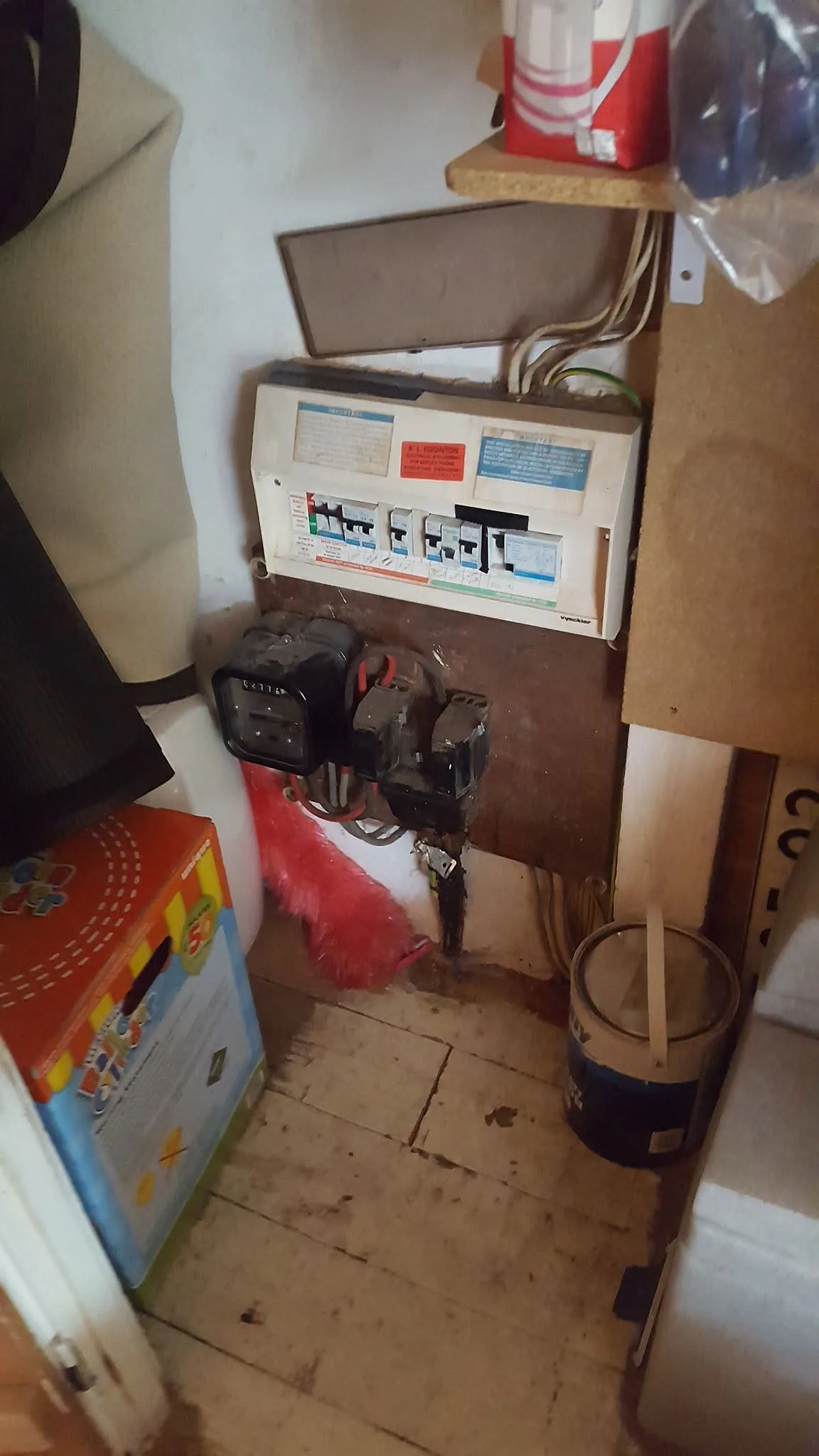
Older wiring was never designed for the demands of a modern home, so it is worth knowing the signs that a rewire may be needed.
Additional appliances, home offices, smart technology and increased everyday demand all place extra strain on ageing wiring. Spotting the warning signs early helps keep your home safe, avoids bigger problems later and means any work can be planned properly rather than rushed.
This guide walks through the most common signs that a property may need rewiring, what each one actually means, the difference between a full and partial rewire, and when it is time to bring in a qualified electrician.
Key Takeaways
- Old rubber, fabric or lead-sheathed wiring is past its safe life
- Frequent tripping, flickering lights and warm sockets are warning signs
- An outdated fuse board may lack modern safety protection
- Not every property needs a full rewire, a partial rewire is often enough
- Testing and rewiring should always be carried out by a qualified electrician
How Old Is the Wiring?
The age of the wiring is one of the best indicators of whether a rewire may be needed.
If a property has not been rewired in the last few decades, the cabling may be reaching the end of its safe working life. Older homes often have rubber, fabric or lead-sheathed cabling that can become brittle and crack over time, particularly where it has been exposed to heat.
If you have recently bought an older property, or you are renovating one, it is worth having the wiring assessed before you decorate or cover anything up. It is far easier and tidier to rewire before new flooring, plastering and decorating go in.
Common Warning Signs
Wiring rarely fails all at once. More often it gives you a series of smaller warnings first. Here are the signs worth paying attention to.
Frequent Tripping
If your fuse board trips regularly, it can be a sign that circuits are overloaded or that there is a fault somewhere in the wiring. An occasional trip is normal, but repeated tripping should be looked into.
Flickering or Dimming Lights
Lights that flicker or dim, particularly when other appliances switch on, can point to wiring that is struggling to cope with demand or to loose, ageing connections.
An Outdated Fuse Board
An old fuse board with rewireable fuses, rather than modern circuit breakers and RCD protection, may not offer the level of safety expected in a modern home.
Discoloured or Warm Sockets
Scorch marks, discolouration or sockets that feel warm to the touch should always be treated as a warning sign and checked promptly.
Not Enough Sockets
Relying heavily on extension leads and adaptors is often a sign that the electrics have not kept pace with how the home is now used.
What the Signs Could Mean
The table below summarises the common signs and what they often point to. It is a guide only, as the cause can only be confirmed by inspection.
| Warning sign | What it could mean |
|---|---|
| Frequent tripping | Overloaded circuits or a wiring fault |
| Flickering or dimming lights | Loose connections or ageing wiring |
| Rewireable fuse board | Outdated protection, no modern RCD safety |
| Warm or discoloured sockets | A connection problem that needs urgent attention |
| Burning smell near sockets | A potentially serious fault, switch off and call an electrician |
| Heavy use of extension leads | Too few circuits for how the home is used |
What You Can Check Yourself
There are a few things you can look for safely, without removing any covers or touching the wiring.
- Look for scorch marks or discolouration around sockets and switches
- Note whether lights flicker or the fuse board trips often
- Check whether the fuse board looks old or uses rewireable fuses
- Count how many extension leads and adaptors you rely on day to day
- Be aware of any burning smells near sockets or the consumer unit
If you notice any of these, it is worth arranging a professional inspection rather than waiting for a fault to develop.
Full Rewire or Partial Rewire?
One of the most common questions homeowners ask is whether they need a complete rewire or just part of the house updated. The answer depends on the age and condition of the existing wiring and any work you are planning.
| Full rewire | Partial rewire | |
|---|---|---|
| Best suited to | Older or unmodernised properties | Homes where only some circuits are dated |
| Scope | All circuits, sockets, switches and the fuse board | Specific rooms, circuits or floors |
| Disruption | Higher, planned in stages | Lower, more localised |
| Typical situations | Period homes, properties never rewired | Extensions, kitchen or bathroom updates |
In many cases only certain circuits, rooms or floors need updating, which can be done with less disruption. After inspecting your property, an electrician can recommend the most sensible approach for your home and budget.
What a Rewire Involves
A rewire is usually carried out in planned stages so that disruption is kept under control.
The first stage often involves running new cabling, which is where floorboards may be lifted and some channelling into walls takes place. Once the new wiring is in, sockets, switches, lighting points and a new consumer unit are fitted. Finally, the installation is fully tested and certified, and any making good is carried out so your home is left clean and tidy.
A good electrician will explain each stage in advance and keep parts of your home powered wherever possible while the work is underway.
How Long Does a Rewire Take?
The time a rewire takes depends on the size of the property, whether it is a full or partial rewire, and whether the house is occupied or empty.
Rather than quoting a fixed figure, a qualified electrician will give you a realistic timescale as part of your quote, based on your specific property. Empty properties are usually quicker, as there is no need to work around furniture and daily routines.
What Affects the Cost of a Rewire?
Every property is different, so the best way to understand cost is to have the work assessed and quoted. The main factors that influence it include:
- The size of the property and number of circuits
- Whether it is a full or partial rewire
- The condition and accessibility of the existing wiring
- Any upgrades, such as additional sockets or a new consumer unit
- Whether the property is occupied or empty during the work
When to Call an Electrician
Testing and inspecting wiring should always be carried out by a qualified electrician.
If you are seeing repeated problems, or buying or renovating an older property, our house rewiring service can assess the existing wiring and advise whether a full or partial rewire is the right option. We also carry out consumer unit upgrades where a full rewire is not needed.
FAQs
How disruptive is a house rewire?
A rewire does involve lifting floorboards and some channelling into walls, so a degree of disruption is expected. A good electrician will plan the work in stages and keep parts of your home powered wherever possible.
Will the work be certified?
Yes. Any rewiring work should be fully tested, inspected and certified on completion. Future Flow Electrical are NICEIC Approved Contractors.
Can old wiring really be unsafe?
Wiring that is past its safe life can increase the risk of faults. If you are concerned, it is always best to have it checked.
Do I have to move out during a rewire?
Not always. Many rewires are carried out while the property is occupied, with the work planned around you. Empty properties are simply quicker and easier to work in.
Making the Right Decision
If your home is showing any of these signs, treat them as a prompt to get the electrics checked rather than something to put off.
A proper inspection will tell you whether a rewire is needed and, if so, whether a full or partial rewire is the better option for your property. Acting early keeps your home safe, avoids more costly problems later and means the work can be planned around you rather than carried out in a hurry.