
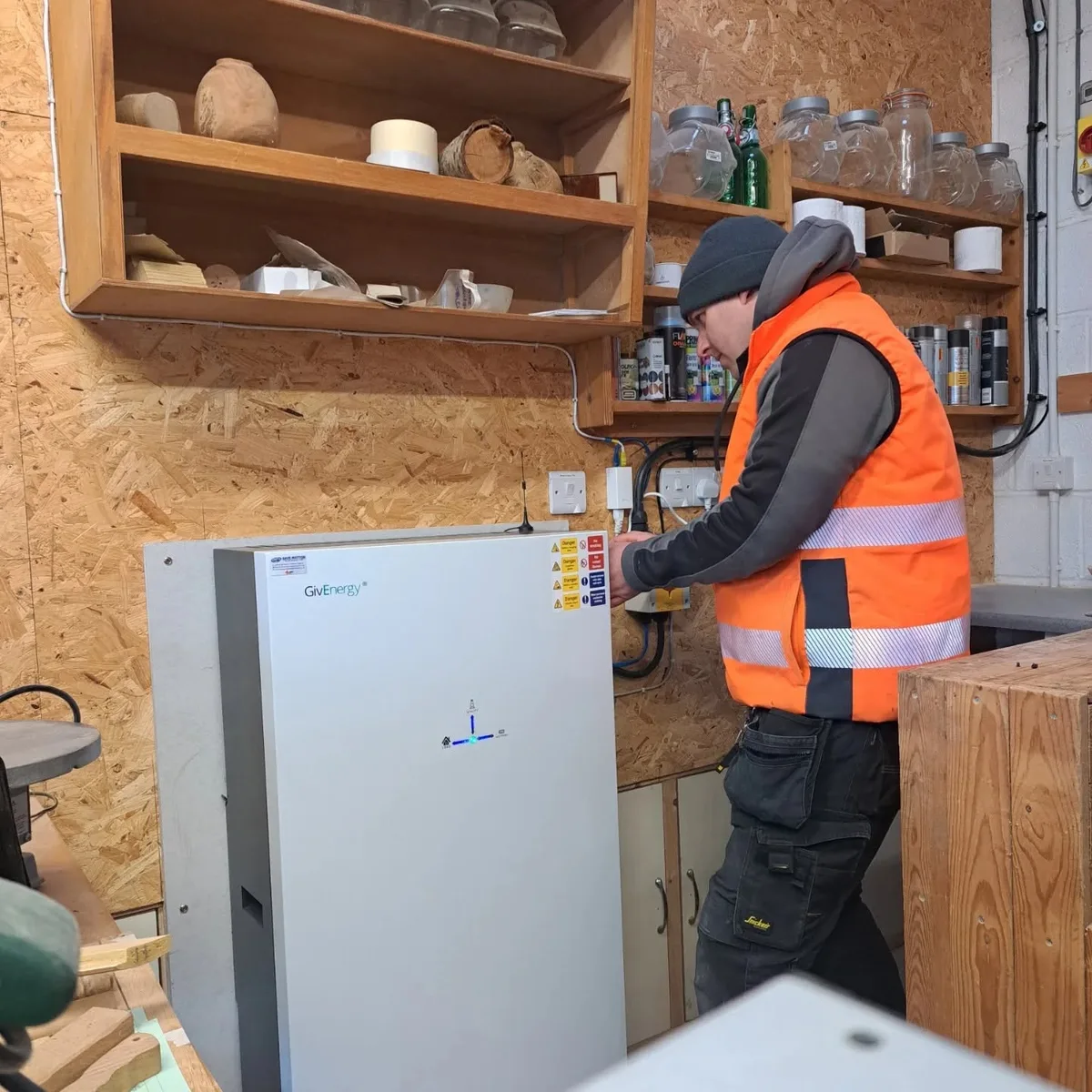
When a solar system stops generating, the panels are rarely the problem. The inverter usually is.
Solar panels have no moving parts and tend to last for decades. The inverter, the box that turns the panels’ output into electricity your home can use, works much harder and wears out much sooner. Many solar systems around Salisbury and Wiltshire were fitted a decade or more ago, which puts their inverters at the age where faults become likely. If a system has quietly stopped earning its keep, the inverter is the first place to look.
Key Takeaways
- The inverter is the part of a solar system most likely to fail
- The Energy Saving Trust advises that inverters usually need replacing after around 10 to 12 years
- A fault light, an error code or a flat line in your monitoring app are the usual first signs
- Never open an inverter or disconnect DC cabling yourself: panels produce a dangerous voltage whenever there is daylight
- Check the warranty before paying for a repair
- If the inverter needs replacing, consider a hybrid inverter so a battery can be added now or later
What The Inverter Does
Your panels generate direct current (DC). Your home, and the grid, run on alternating current (AC). The inverter converts one to the other, and it also monitors the grid connection and shuts the system down safely if something is wrong.
Because it is doing that work every daylight hour, often in a hot loft or garage, it is the component that ages fastest. The Energy Saving Trust expects panels to last 25 years or more, and the inverter to need replacing well within that time.
Signs Your Inverter Has A Problem
- No generation in your monitoring app, or a flat line on a sunny day
- A red or orange fault light, or an error code on the display
- A blank display during daylight, when it would normally show output
- Generation well below the same month last year, with no obvious change in shading
- Your generation meter not moving on a bright day
- The system repeatedly switching off and on, or tripping its circuit breaker
Some of these have simple causes, such as a monitoring dongle that has lost its Wi-Fi connection after a router change. A system that shows nothing in the app may still be generating perfectly well. Check the generation meter before assuming the worst.
Safe Checks You Can Make Yourself
There are a few things worth checking before calling anyone out:
- Look at the inverter display or lights and make a note of any error code. Take a photo if you can.
- Check your consumer unit for a tripped breaker or RCD labelled for the solar or PV circuit.
- Check the generation meter to see whether it has moved since you last looked.
- Check the monitoring connection if the app is the only thing showing a problem.
What you must not do is open the inverter, remove covers or disconnect the cabling between the panels and the inverter. Solar panels generate whenever there is daylight, and the DC side of the system can carry a high voltage that cannot simply be switched off at the consumer unit. Leave that to a qualified installer.
Repair Or Replace?
Once the fault is found, the decision usually comes down to four things.
Is It Still Under Warranty?
The Energy Saving Trust notes that most inverters come with a warranty of at least five years, and that many can be extended. If yours is still covered, the manufacturer will normally repair or replace it, although labour may not be included. Find the original paperwork, or the serial number on the side of the unit, before paying for anything.
How Old Is It?
An inverter that fails after three or four years is often worth repairing. One that is ten or more years old is usually better replaced, because even if this fault is fixed, the next one is not far away.
Is It Still Supported?
Some older inverters are no longer made, and parts or firmware support may no longer be available. That can make a repair impractical, whatever the age.
Do You Want A Battery?
If you have been thinking about battery storage, an inverter failure is the obvious moment to act. A hybrid inverter runs the panels and a battery together, so it can be fitted now with a battery added straight away or later. Our guide to adding a battery to existing solar panels explains the options.
What A Replacement Involves
Replacing an inverter is a much smaller job than installing a new system. The new inverter has to be matched to your panels, so their number, layout and output all need checking, and to your supply and consumer unit.
A few things are easy to overlook:
- Notifying the network operator. If the replacement changes the system’s output rating, your electricity network operator may need to be notified. Your installer should handle this.
- Feed-in Tariff payments. If your system is on the Feed-in Tariff, tell your FIT supplier before you change equipment and keep the paperwork for the new inverter. They can confirm exactly what they need from you.
- Export payments. If you are on the Smart Export Guarantee instead, your supplier may ask for updated details. For systems up to 50kW, SEG suppliers ask for an MCS certificate or an approved equivalent.
- Monitoring. A new inverter usually comes with a new app, so you can see generation clearly again.
Is It The Inverter At All?
Not every drop in generation is an inverter fault. New shading from a growing tree, a damaged cable, a failed panel or a problem with the isolator can all reduce output. A proper diagnosis checks the whole system rather than swapping the inverter and hoping. If your system is older and generally underperforming, it may also be worth looking at whether the original design still suits how you use electricity now.
Frequently Asked Questions
How long does a solar inverter last? The Energy Saving Trust advises that inverters usually need replacing after around 10 to 12 years, although some last longer and some fail sooner.
Is it safe to reset my inverter? Resetting a tripped breaker at the consumer unit is fine. Do not open the inverter or disconnect any DC cabling, because the panels produce a dangerous voltage in daylight.
Can you repair an inverter you did not install? Yes. Inverter repairs and upgrades on existing systems are work we take on, including systems fitted by other installers. Some installers will not quote for this kind of work.
Will a new inverter affect my Feed-in Tariff? Tell your FIT supplier before you change equipment and keep the paperwork. They can confirm what they need for your payments to continue.
Should I replace my inverter with a hybrid? If you might want a battery in the future, it is usually worth it. A hybrid inverter lets a battery be added without changing the inverter again.
Talk To Us About Your Solar Inverter
If your system has stopped generating or is not producing what it used to, we can find out why and tell you honestly whether it needs a repair, a replacement or nothing more than a reset. We repair, replace and upgrade inverters, add battery storage to existing systems and install new solar panel systems across Salisbury, Downton and the surrounding area.
You get a free, itemised quote with no obligation.